
Error: Contact form not found.
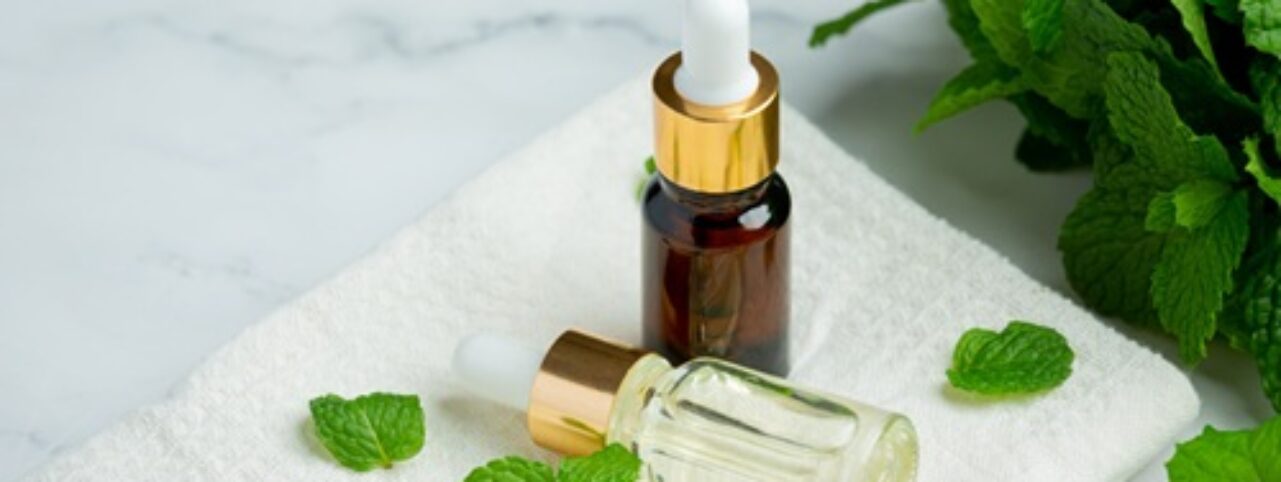
Lip care is one of the fastest growing segments in the personal care and cosmetics industry. As consumers continue to look closer at ingredient lists, formulators and brand owners continue to look towards botanically-derived activities that provide results that are easily measurable without the use of synthetic additives.
Peppermint oil is at a very interesting intersection: it is a functional active, a sensory enhancement while also being a natural preservative aid. For cosmetic brands, ayurvedic product manufacturers and private label owners that are building lip care lines, understanding its properties from a formulation and sourcing perspective is becoming increasingly relevant.
This guide takes a look at the science behind how peppermint oil affects the skin on our lips, how it has practical uses in the development of products and what you need to look for when sourcing this oil for use in commercial formulation.
Peppermint oil (Mentha piperita) is a steam distilled essential oil of Mentha piperita which contains high levels of menthol, menthone and menthyl acetate. These primary constituents are responsible for the cooking oil’s characteristic cooling sensation, anti-inflammatory effect and mild antimicrobial features.
When the compounds are used on the skin on the lips, one of the thinnest and most sensitive areas of the face, the compounds interact with cold sensitive receptors (TRP8 channels), providing an immediate cooling and tingling feeling. This is not the only sensory response. The boost of blood flow caused by this interaction is responsible for giving lips a natural plumping and rosier look, which is why peppermint oil has been a staple in lip gloss and lip plumper formulations around the world.
Active components and their function includes:
Menthol: Cooling agent, mild analgesic, circulation stimulant on the lip surface
Menthone: Fragrance profile, mild antiseptic
Menthyl acetate: Gives the sweet, minty note; adds texture to balm formulations
Rosmarinic acid and flavonoids: Antioxidant activity that promotes the renewal of skin cells at the edges of the lips
Chapped lips are caused by the lack of moisture, UV exposure, cold air and friction. Peppermint oil contains menthol that creates immediate relief that is soothing and relieves the surface inflammation and the discomfort that comes with dryness. When combined with occlusive carriers such as beeswax or shea butter, it helps and support the natural barrier function of the skin and deliver the active properties of the ingredient.
The temporary vasodilatory effect of peppermint oil (where increased circulation on the surface causes lips to look fuller and more defined) has made them the active choice in clean beauty lip plumper formulations. Unlike the synthetic plumping agents, peppermint oil does so without causing histamine response in the majority of users, which makes it suitable for sensitive skin formulations when used in appropriate concentrations (usually 0.1-1% in finished products).
Peppermint oil has measurable antimicrobial activity against common cosmetic contaminants. In lip balm formulations and lip gloss formulations, this property plays a crucial role in product stability and may result in less shebang for synthetic preservatives, another increasingly important selling point when it comes to the uptake of natural and organic certified product lines.
Beyond its functional properties, peppermint oil provides an experience of the taste of lip products. The clean, fresh fragrance profile is highly preferred in consumer research for consumer lip care in the global markets. In B2B product development, this dual functionality, this active ingredient and natural fragrance, enhances formulation efficiency and the calculation of cost per unit.
For brands developing lip care products with peppermint oil, the guidelines for formulating these products are:
Concentration: Use in the concentration of 0.1-1.0% in lip balms, glosses and scrubs. Exceeding 1% can cause irritation of sensitive skin in the mouth on the lips.
Carrier oil compatibility: Compatible with castor oil (gloss and sticking), jojoba oil (light moisturization) and coconut oil (balm consistency)
Blending temperature: To preserve the volatile aromatic compounds, add peppermint oil to formulations that are below 40degC
Regulatory note: Menthol content must be in conformity with IFRA guidelines as well as cosmetic regulations in the region with respect to leave-on lip products
Labeling: Decline as Mentha Piperita (Peppermint) Oil according to INCI nomenclature for EU and US market compliance
India is one of the major producers of peppermint oil in the world especially from the Uttar Pradesh belt where the cultivation of Mentha arvensis and Mentha piperita is concentrated. For brands sourcing at commercial scale, quality assurance is beyond standard CoA documentation.
A good checklist of sources for commercial peppermint oil:
When evaluating supply partners, working directly with a certified Peppermint oil Manufacturer in India reduces quality risk and ensures traceability from raw material sourcing to final dispatch.
Sivaroma Naturals has 25+ years of essential oil manufacturing experience to offer to B2B buyers across the cosmetics, pharmaceutical and Ayurvedic sectors. With a range of 500+ products, 15 ton daily manufacturing capacity and international certifications ranging from Halal, Kosher, USFDA, WHO GMP, ISO 9001:2015, HACCP, and FSSAI, the company is working as a reliable end-to-end supply partner for brands looking to build natural lip care and personal care products.
For international buyers looking to consolidate sourcing, partnering with a certified Peppermint oil Exporter in India with proven export infrastructure to Canada, USA, Europe, and Gulf markets simplifies procurement and ensures regulatory compliance across geographies. Brands including Cipla, Himalaya, Patanjali, and Dabur have relied on this manufacturing and supply capability.
Take the Next Step
For cosmetic brands and private label owners interested in developing high-performance lip care products containing peppermint oil, the sourcing decision begins with verifying the quality and credibility of the suppliers.
Peppermint oil must be diluted before application to the lips at all times. In concentrations that are 0.1-1% in a carrier base, it is thought to be safe for most users. Undiluted application may cause irritation or burning sensation over sensitive skin on the lips especially in children or people suffering from reactive skin conditions.
The menthol in peppermint oil works by stimulating circulation at the surface of the lips by activating the TRPM8 cold receptors and temporarily increases blood flow. This is a mild swelling effect and a more rosy, defined appearance of the lips, without the use of any synthetic actives or injectable procedures.
Yes, when well diluted and formulated. Blending peppermint oil with non-comedogenic oil blends such as jojoba or shea butter takes the risk of irritation away. Formulators should do patch testing and stick to the concentration within the 0.1-0.5% range for sensitive skin product lines.
For cosmetic and pharmaceutical purposes, seek out suppliers that hold ISO 9001:2015, WHO GMP, USFDA registered and FSSAI certified as a minimum. Halal certification and kosher certification are of further significance for brands that cater to Middle Eastern markets, Southeast Asian markets or Jewish markets.


